Choosing the right soil preparation tool is critical for successful gardening and farming. Two machines are often confused yet serve distinct purposes: the cultivator and the tiller. While they may appear similar at first glance, their design, power, depth capability, and intended use differ significantly. Understanding these differences allows us to select the correct equipment, improve soil health, reduce labor, and achieve better crop yields.
This comprehensive guide delivers a precise, side-by-side comparison of cultivator vs tiller, helping homeowners, gardeners, and small-scale farmers make informed decisions based on real-world use cases.
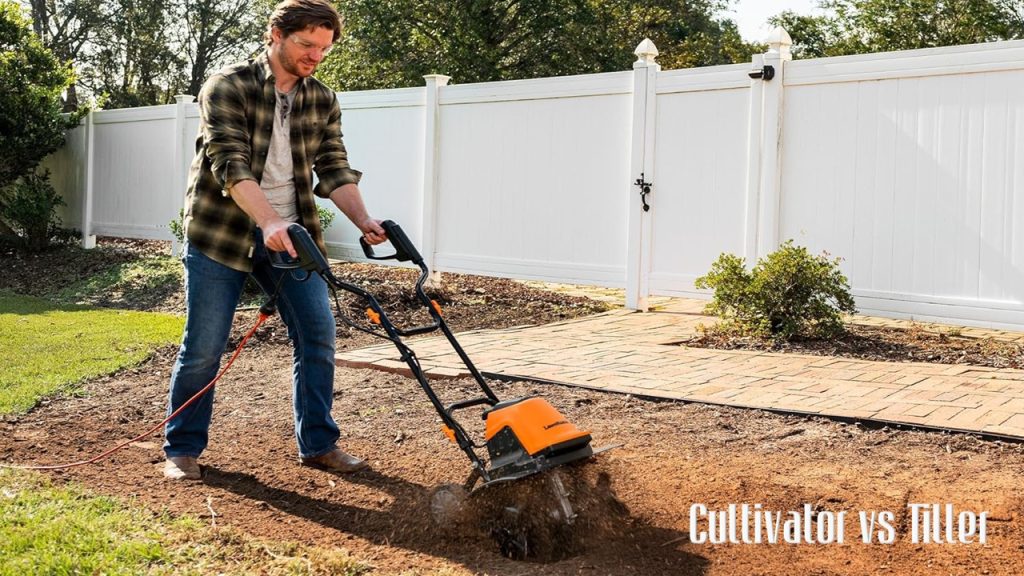
Table of Contents:
What Is A Cultivator?
A cultivator is a light-duty soil-working machine designed primarily for surface-level soil maintenance. It is commonly used after planting to manage weeds, aerate the soil, and maintain garden beds.
Key Features of a Cultivator
- Lightweight and compact design
- Shallow soil penetration (typically 1–4 inches)
- Narrow working width
- Available in electric, battery-powered, and small gas models
Cultivators excel at precision work in established gardens, flower beds, and raised beds where minimal soil disruption is required.
What Is A Tiller?
A tiller is a heavy-duty soil preparation machine built to break new ground and deeply loosen compacted soil. It is most often used before planting to prepare large areas of land.
Key Features of a Tiller
- Powerful gas engines or heavy electric motors
- Deep soil penetration (6–12 inches or more)
- Wide tilling paths
- Designed for tough, compacted soil
Tillers are essential tools for new gardens, large plots, and agricultural fields where soil needs to be completely turned and conditioned.
Cultivator vs Tiller: Core Differences
| Feature | Cultivator | Tiller |
| Primary purpose | Soil maintenance | Ground breaking |
| Soil depth | Shallow | Deep |
| Power | Low to moderate | High |
| Size | Compact | Large |
| Best use | Weed control, aeration | New garden preparation |
The fundamental difference lies in soil depth and power, which directly impacts where and how each machine is used.
Power And Performance Comparison
Cultivator Power
Cultivators rely on smaller motors or engines, making them easy to control and maneuver. They are not designed to handle rocks, thick roots, or hard-packed soil.
Tiller Power
Tillers deliver significantly more torque and rotational force. They are engineered to cut through clay soil, sod, and compacted ground with minimal resistance.
In performance terms, tillers dominate heavy soil work, while cultivators excel in finesse tasks.
Soil Depth And Working Width
Cultivators
- Depth: 1–4 inches
- Width: 6–12 inches
- Ideal for tight spaces and row gardening
Tillers
- Depth: 6–12+ inches
- Width: 16–36 inches
- Ideal for large open areas
For shallow soil aeration and weed disruption, cultivators provide accuracy. For full soil turnover, tillers are unmatched.
Ease Of Use And Maneuverability
Cultivator Handling
- Lightweight and easy to carry
- Simple controls
- Minimal physical strain
Cultivators are ideal for beginners, seniors, and users with limited storage space.
Tiller Handling
- Heavier and more demanding to control
- Requires strength and experience
- More stable on large plots
Tillers require deliberate handling but offer superior productivity on demanding tasks.
Best Applications For A Cultivator
A cultivator is the superior choice when:
- Maintaining ** when:
- Maintaining established gardens
- Removing young weeds
- Mixing compost or fertilizer into topsoil
- Working around plants without disturbing roots
- Managing raised beds or narrow rows
Cultivators are maintenance tools, not land-clearing machines.
Best Applications For A Tiller
A tiller is the correct choice when:
- Creating a new garden
- Breaking sod or compacted soil
- Preparing land for large-scale planting
- Mixing organic matter deep into soil
- Rehabilitating neglected ground
Tillers are soil transformation tools, designed for intensive work.
Cost Comparison
| Machine | Typical Price Range |
| Cultivator | Low to moderate |
| Tiller | Moderate to high |
Cultivators offer excellent value for small gardens, while tillers represent a long-term investment for serious growers and landowners.
Maintenance And Durability
Cultivators
- Minimal maintenance
- Fewer moving parts
- Shorter lifespan under heavy use
Tillers
- Regular engine maintenance required
- Durable construction
- Long service life with proper care
Tillers are built for longevity, while cultivators prioritize convenience and simplicity.
Electric vs Gas Options
Cultivators
- Electric and battery models are common
- Quiet operation
- Low emissions
- Limited power
You May Also Like:

Tillers
- Predominantly gas-powered
- High torque output
- Suitable for remote areas
- Louder operation
You May Also Like:

Electric cultivators suit residential use, while gas tillers dominate agricultural applications.
Which One Should You Choose?
Choose a cultivator if:
- You already have loose soil
- You focus on garden maintenance
- You want lightweight, easy operation
Choose a tiller if:
- You need to break new ground
- You manage large plots
- You require deep soil preparation
For many experienced gardeners, owning both tools provides the most flexibility across seasons.
Common Buyer Mistakes
- Buying a cultivator for hard, compacted soil
- Purchasing a tiller for small raised beds
- Ignoring soil type and garden size
- Overestimating required power
Matching the machine to the task is essential for efficiency and equipment longevity.
Final Verdict
The debate of cultivator vs tiller is not about which machine is better overall, but which tool is right for the job. Cultivators shine in precision, maintenance, and ease of use, while tillers dominate in power, depth, and land preparation. Understanding their differences ensures healthier soil, better crops, and a more efficient gardening experience.
FAQs
Q: Can a cultivator replace a tiller?
No. A cultivator cannot handle compacted or virgin soil effectively.
Q: Is a tiller too powerful for small gardens?
Often, yes. It can damage soil structure in tight spaces.
Q: Which tool is better for weed control?
Cultivators are ideal for shallow weed management.
Q: Are electric cultivators powerful enough?
For light-duty garden work, absolutely.
Q: How often should soil be tilled?
Only when necessary—over-tilling harms soil health.
Leave a Reply